


Why the economy feels worse than it is
Conflict-driven inflation is colliding with resilient growth, booming capex and record markets
5 min read
KEY POINTS
- Economic fundamentals remain strong, with solid GDP, job gains and record markets, despite geopolitical tensions and higher energy costs
- Inflation, especially in everyday expenses like gas, continues to erode consumers’ purchasing power.
- Diverging sentiment indicators suggest that businesses are benefiting from the economic growth, while consumers are feeling the strain.
Cognitive dissonance is the psychological discomfort someone experiences when a they hold conflicting beliefs, values or behaviors. The discomfort arises from the human desire for consistency and harmony. When we consider the mosaic of the economy now, it is easy to see why this feeling of cognitive dissonance is widespread.
The conflict in Iran serves as a primary source of angst for many. Armed conflict is never ideal and its implications, most directly seen by consumers at the gas pump, mean we may see and think about the it almost daily. Whether one agrees or disagrees with the basis for the conflict, we are all paying a price. .
However, despite the huge increase in energy prices, economic growth, as measured by gross domestic product (GDP), remains positive and corporate earnings have been nothing short of spectacular with further increases forecast in the coming quarters. Market-based measures of potential stress from deteriorating credit conditions also indicate a benign outlook for growth going forward. Major domestic stock averages continue to move higher while setting multiple all-time records as they do so. Meanwhile, the last three employment reports, which coincide with the Iran conflict, show much-better-than-expected gains in new jobs and a jobless rate that remains near generational lows.
A big part of the story is corporate capital expenditure (capex). Most visibly, artificial intelligence (AI)-driven capex has led to a boom in datacenters and chip fabrication. However, recent data also shows increasing levels of capex in other industries, too. It’s important to note that the policies that are leading to this increase in capex, tariffs and the One Big Beautiful Bill Act, had equally divided levels of support and objections.
And yet, building on the “cost” of the conflict, recent measures of inflation are surging higher. Annualized rates of consumer prices are up over 4% and wholesale prices over 6%. While it is true that the Federal Reserve looks at “core” inflation, which strips out the more volatile measures of inflation like food and energy, consumers live in the real world. In this real world, overall price levels are much higher and budgets are getting squeezed. This is particularly true if one does not own their home or is not invested in financial assets, like stocks, as overall aggregate wage gains have not kept up with inflation since the onset of the pandemic.
Thinking about these aspects, is it any wonder that measures of consumer confidence and consumer sentiment do not paint a rosy picture. The human tendency to focus more on negative aspects than positive also helps explain the current malaise.
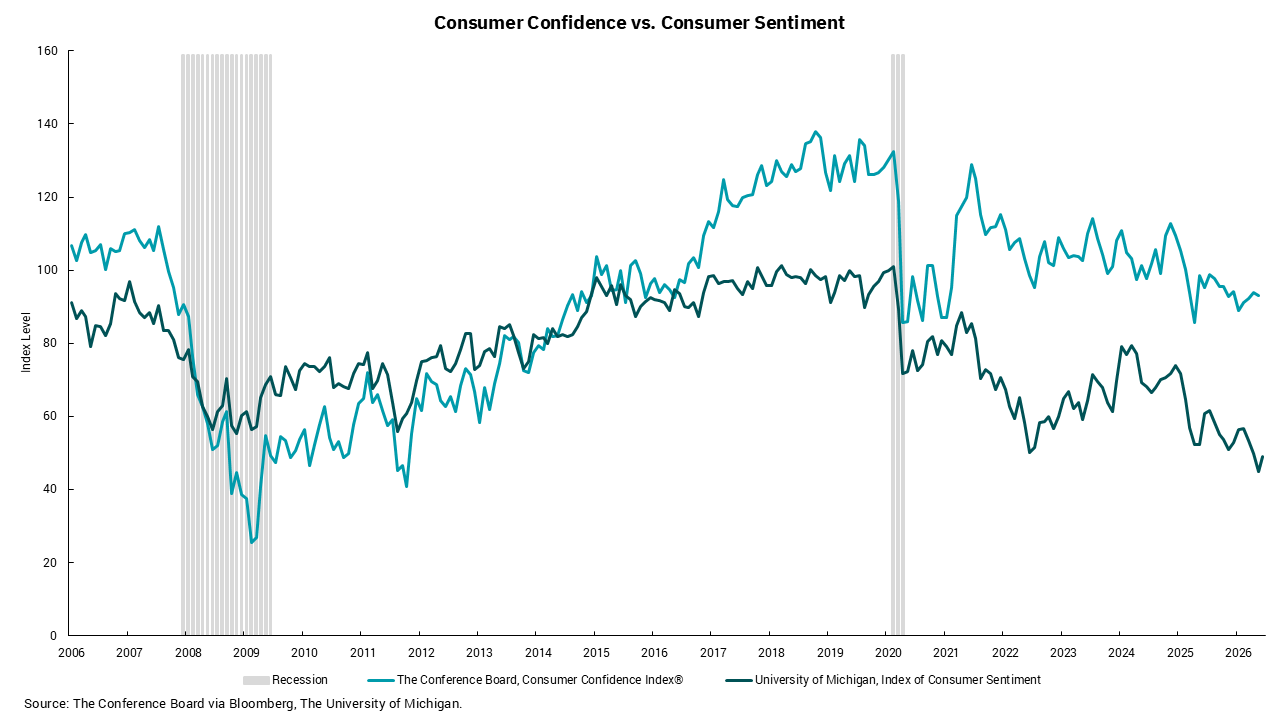
However, even within the measures of sentiment and confidence we see major differences. Our chart this week shows two widely followed measures which come out monthly, he Conference Board’s Consumer Confidence Index and the University of Michigan’s Index of Consumer Sentiment. After tracking closely for several years, a wide gap has opened between the two. When looking at how the surveys are conducted and the areas of focus, this gap might be explainable. The Conference Board index is larger, surveying 3,000 households, and focuses on job market indicators. The University of Michigan survey is smaller, 500 households, and tends to focus more on consumer pocketbook items like gasoline prices. At present, it would seem companies are doing better than individuals. As long as that is the case, and inflation is a key reason why this difference exists, we might expect a continued gap between the two measures.
Get By the Numbers delivered to your inbox.
Subscribe (Opens in a new tab)